GREEN GOLD
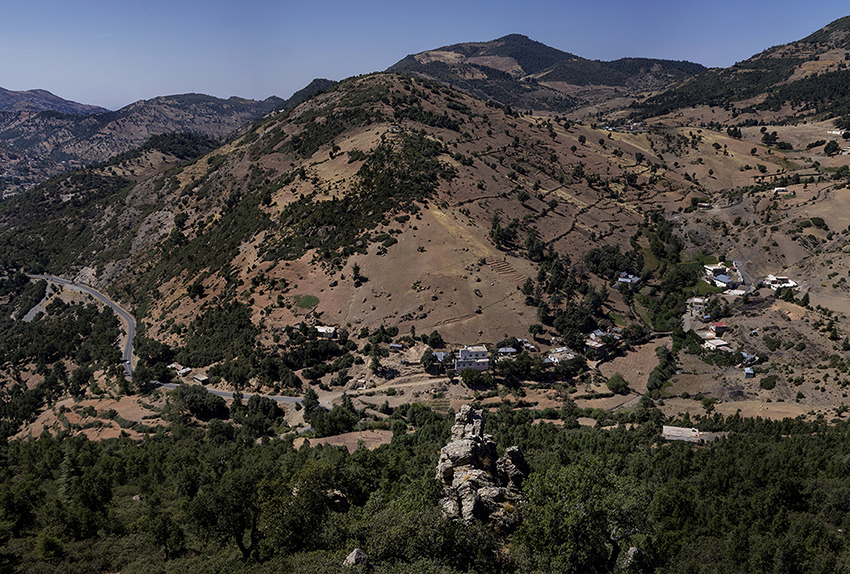
As exports of Moroccan hashish continue to rise, the Ketama Valley is in a serious state of decline. Until half a century ago, this glorious alpine landscape in the Rif mountain range attracted a European bohemian crowd enchanted by such a nearby and spectacular destination, also renowned for the traditional cultivation of Cannabis sativa*, a psychoactive hemp whose dried leaves, known as kif, are smoked in a pipe. Its recreational use throughout the Maghreb sustained the simple way of life in towns and villages, based on family-run farms situated in clearings amongst the lush pine and cedar forests. No one in their right mind would have thought back then of resorting to mass deforestation to turn the peaks and slopes into the vast sun-baked expanse they are today. Not, at least, until the emergence of Asian-style hashish in the 1970s. Compared to kif, this resinous paste extracted from the hemp flower offered a much more potent and long-lasting psychoactive effect, which dramatically increased its profitability. The only drawback was that its production required vast open-air crops under the blue sky, plus all the water available in the surrounding area to irrigate them for months on end, often mixed with fertilisers and pesticides that decimate biodiversity. Similarly, the establishment of the mafia’s empire has long since wiped out tourism.
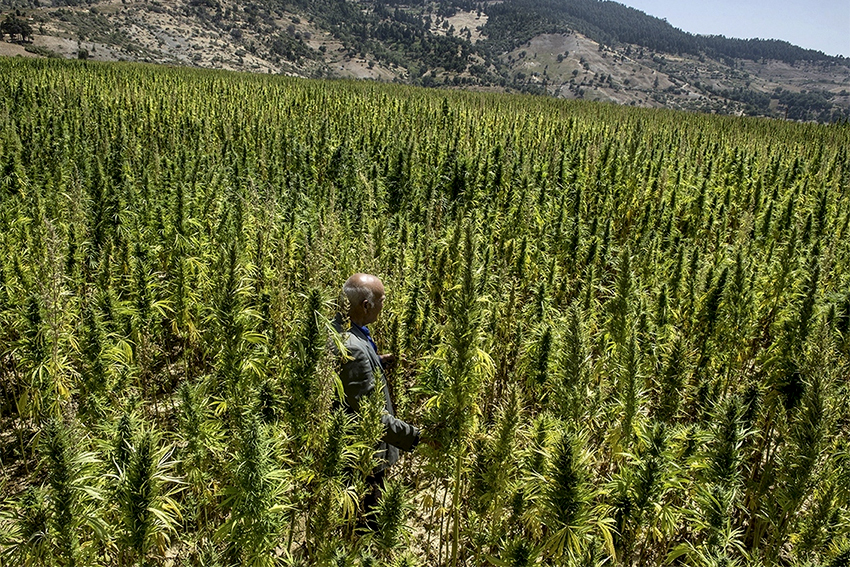
*The Cannabis sativa, a plant with psychoactive properties native to Asia, was already being cultivated in these North African mountains before Islamisation. When Morocco gained independence in the middle of the last century, the newly established monarchy sought to ban its cultivation but had no choice but to grant a special licence to a handful of hardy Kabyle (or Berber) clans in the Ketama region in exchange for them keeping the peace. The art of hashish-making – or the extraction of the resin secreted by the plant’s flowers – was introduced to the area two decades later by Western travellers who had learnt the techniques in Central Asia or the Middle East. Around eighty plants are needed to produce one kilo of resin. It is estimated that Morocco illegally exports some 20,000 tonnes a year.
no images were found