
CITY OF ISLAM
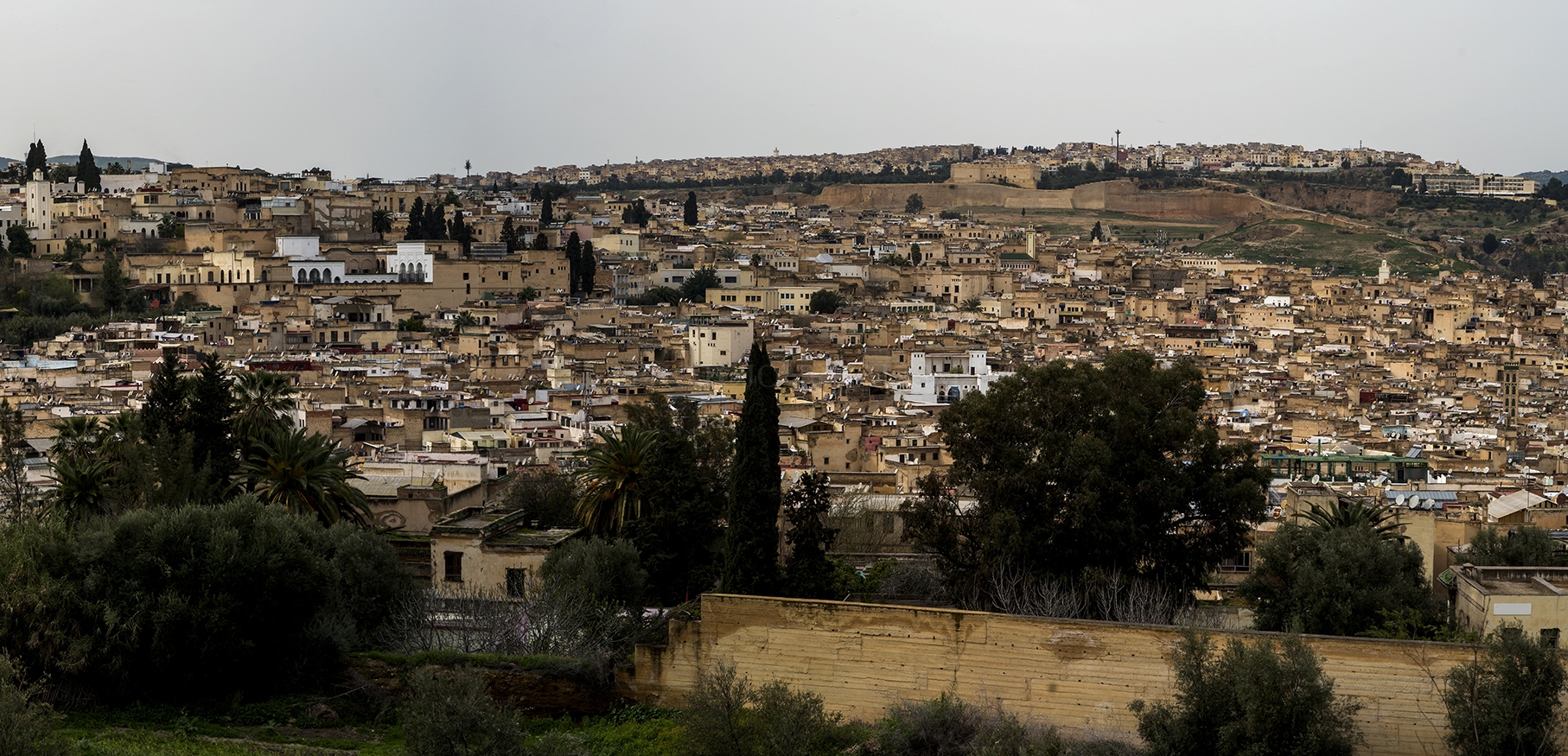
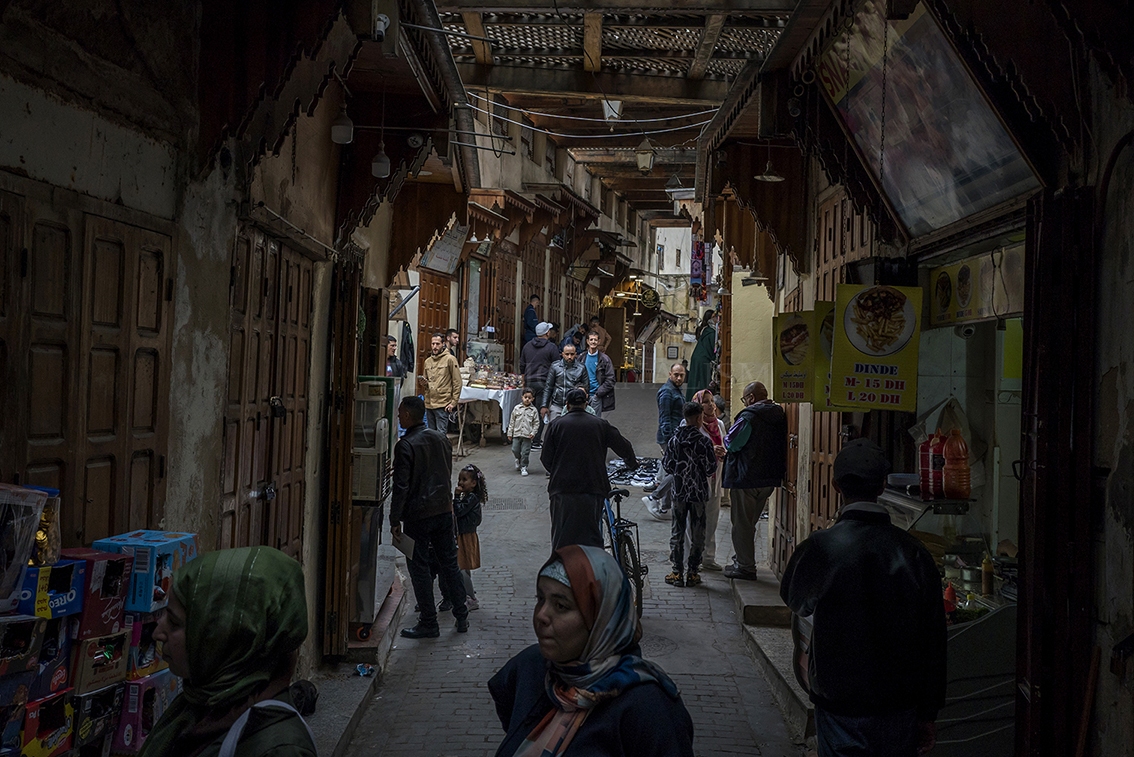
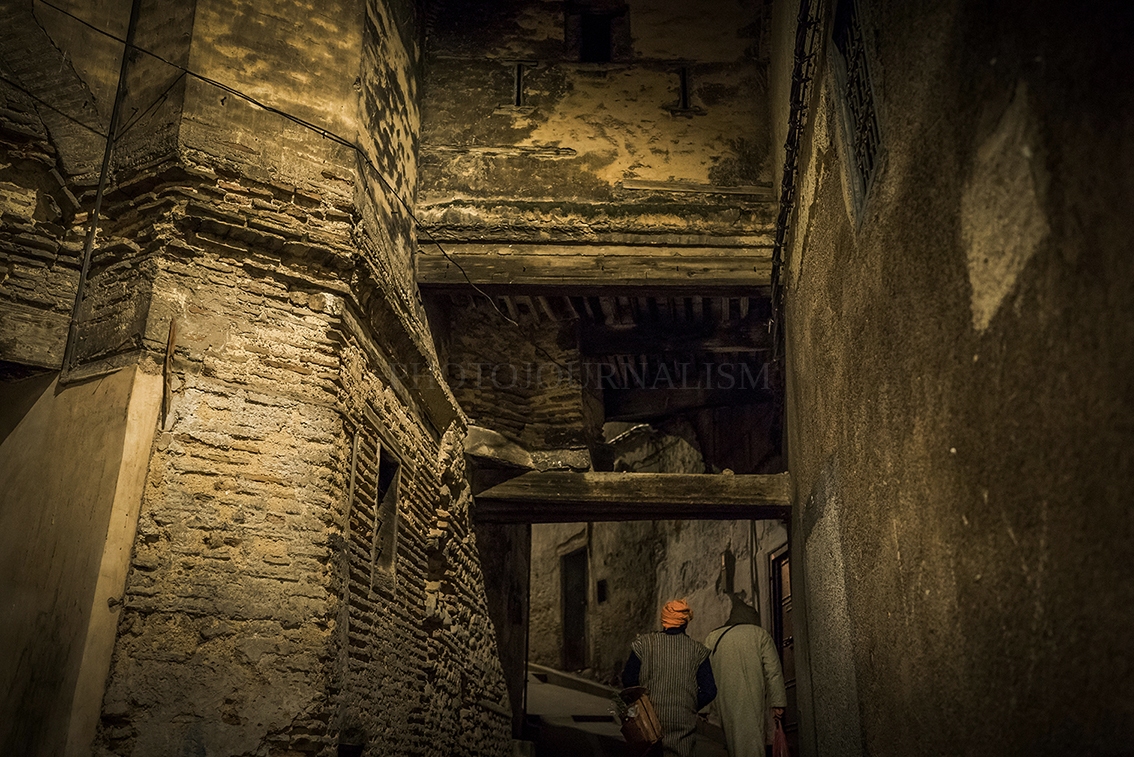
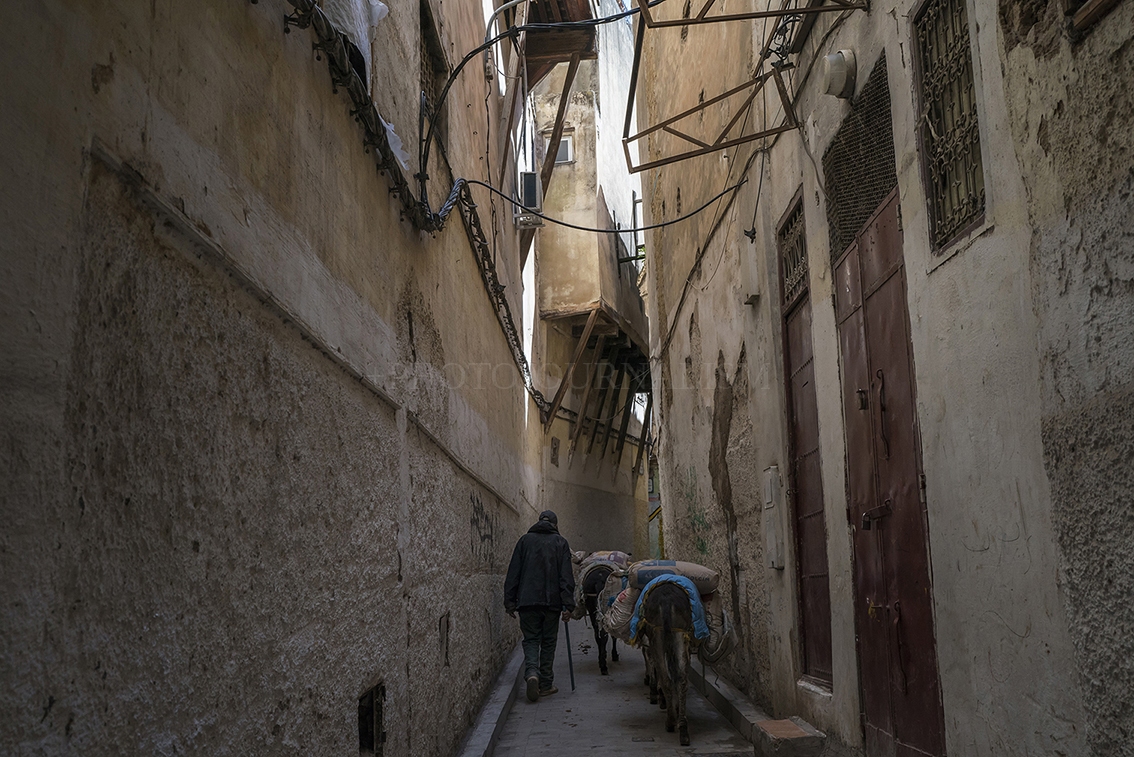
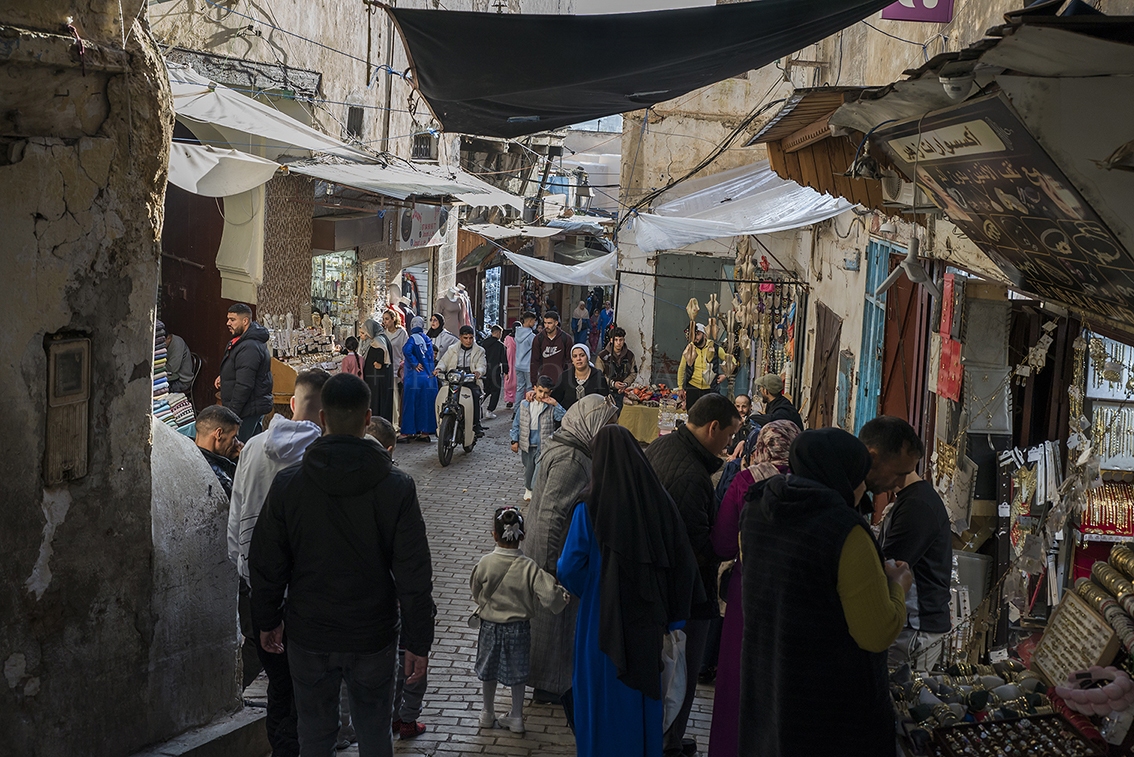
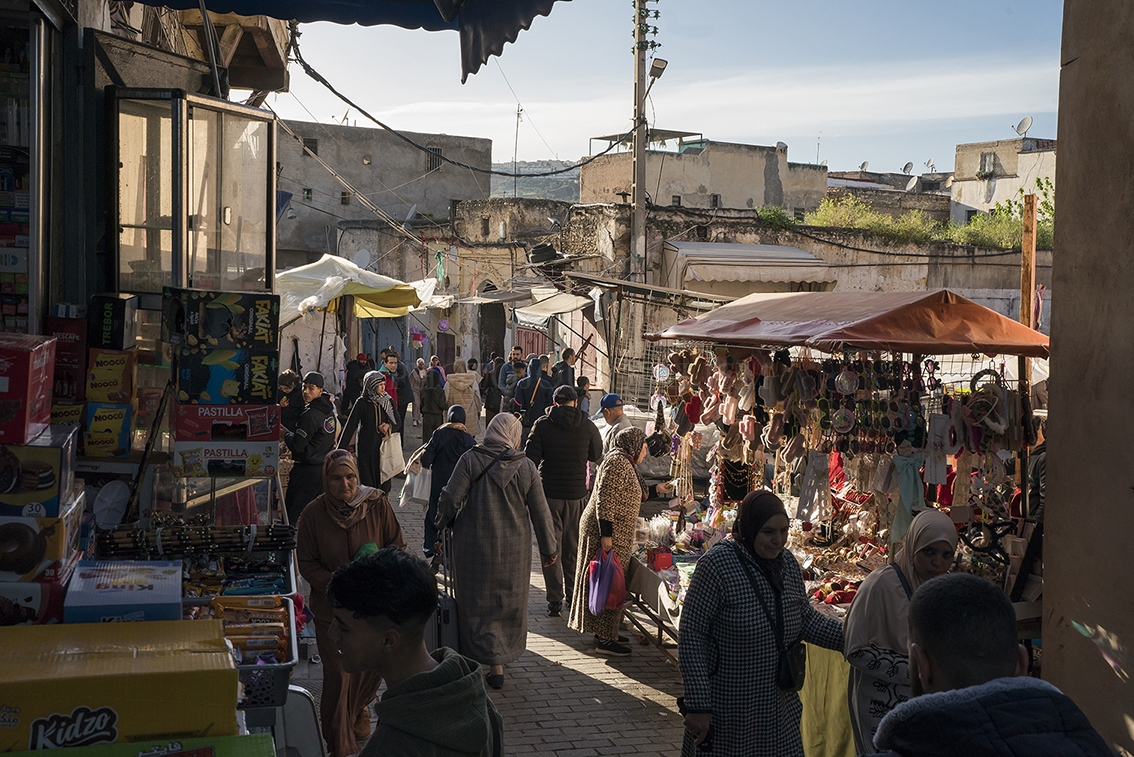
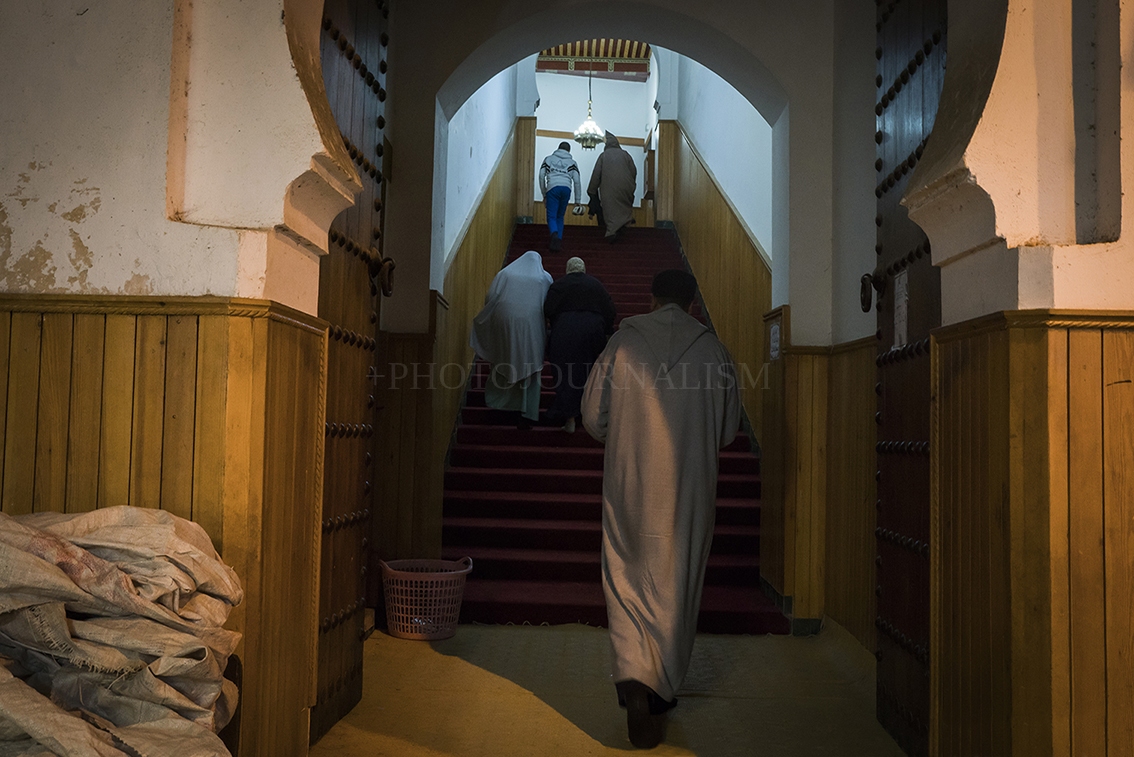
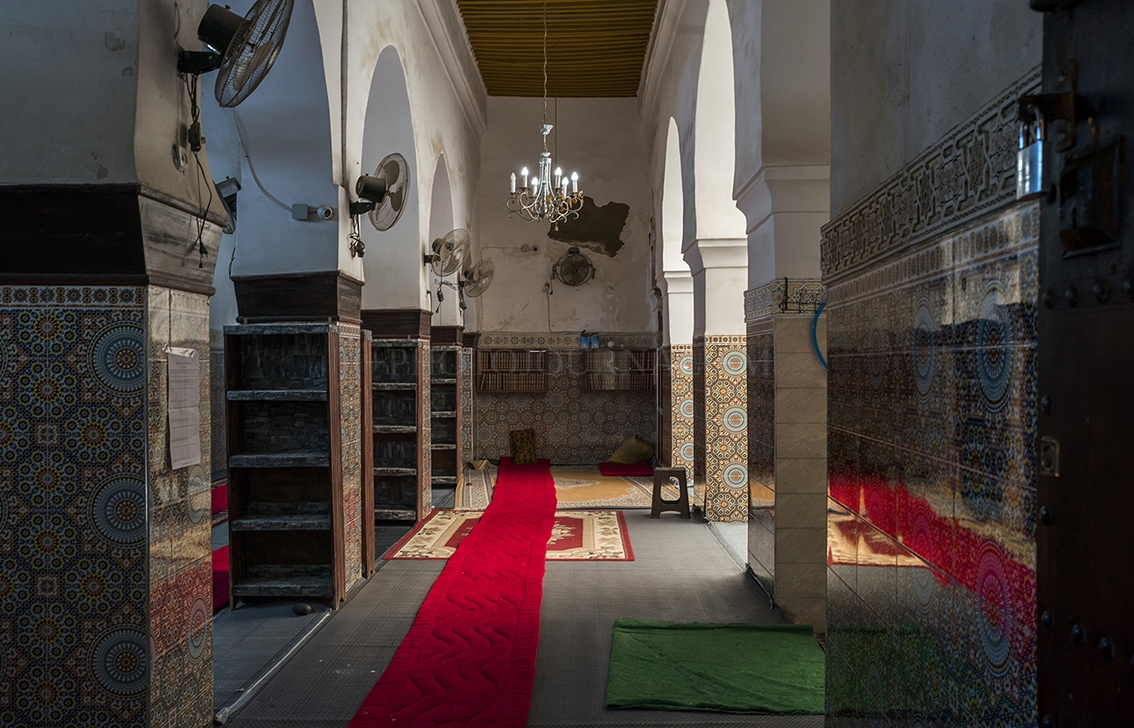
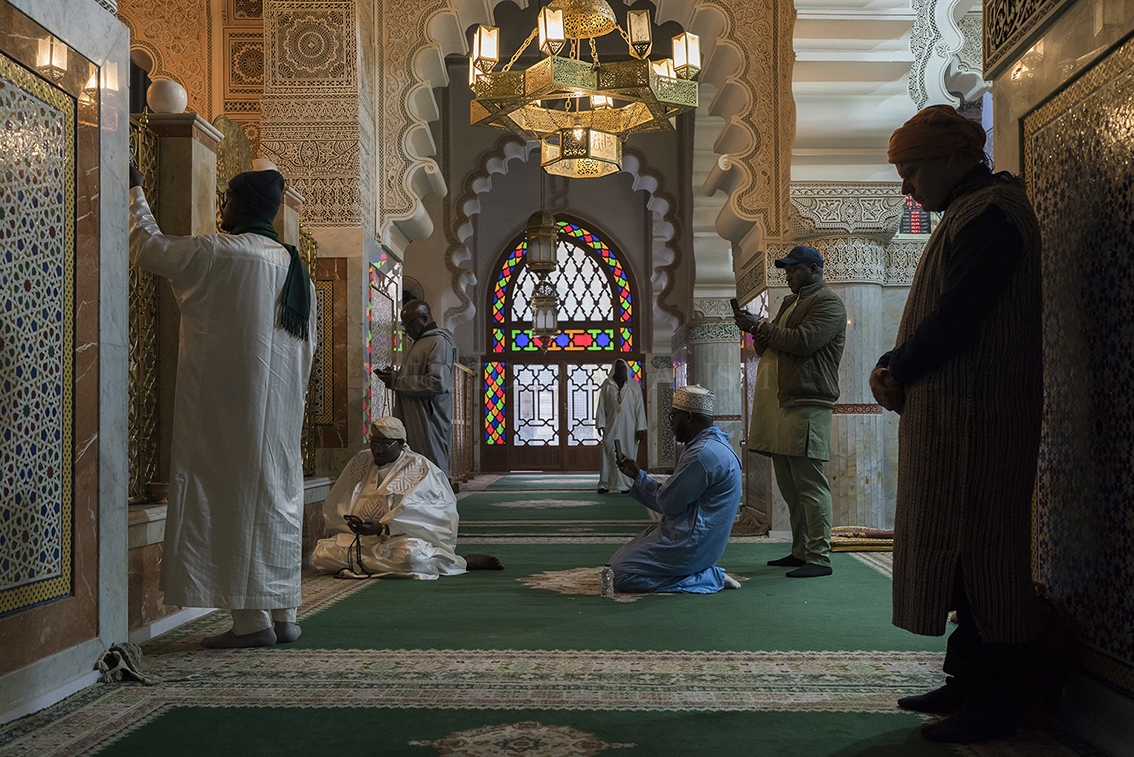
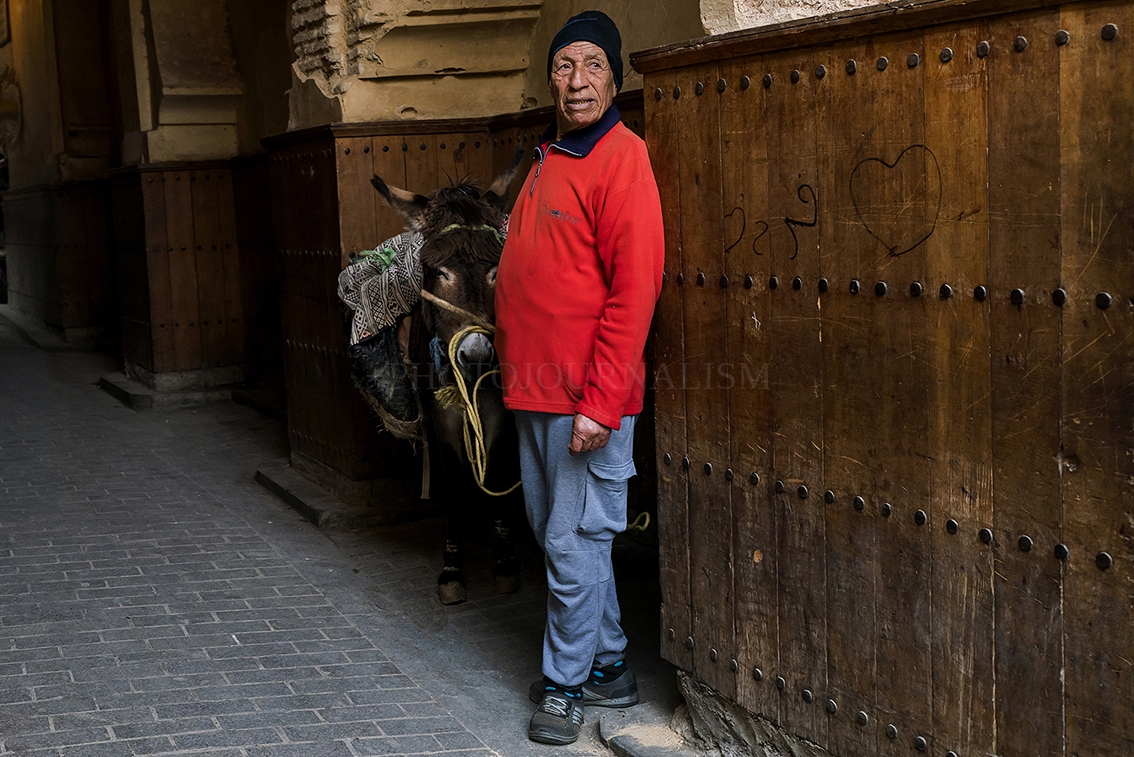
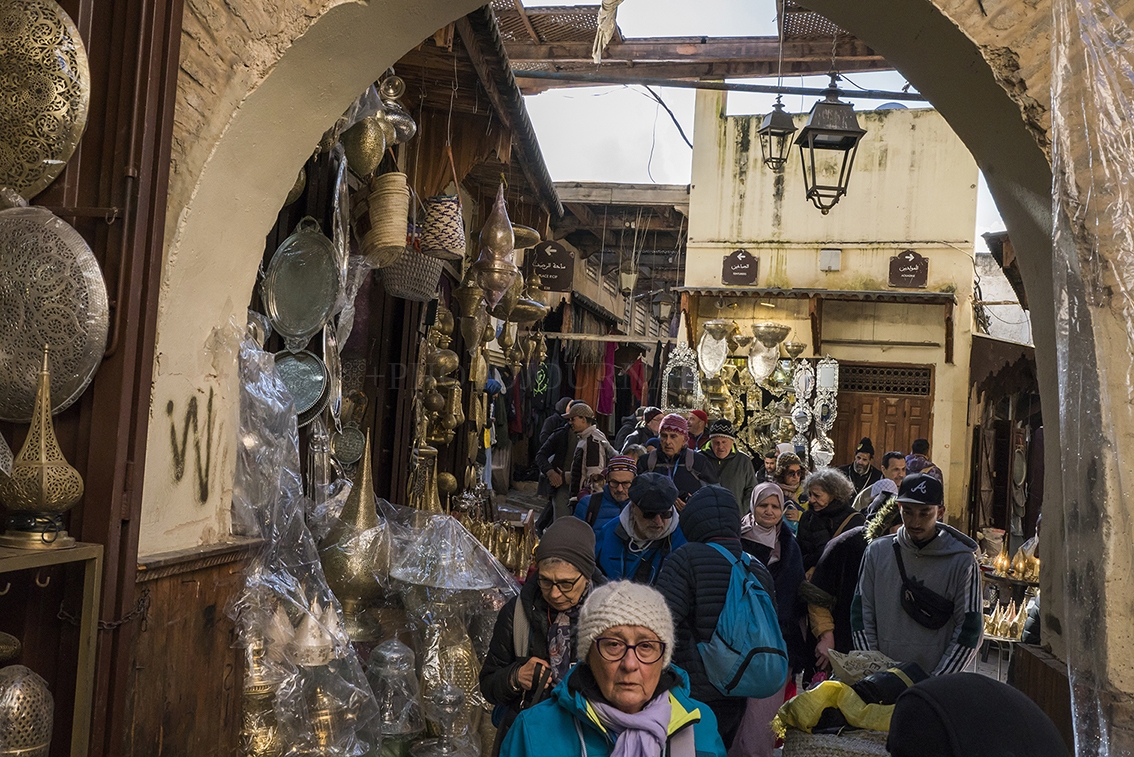
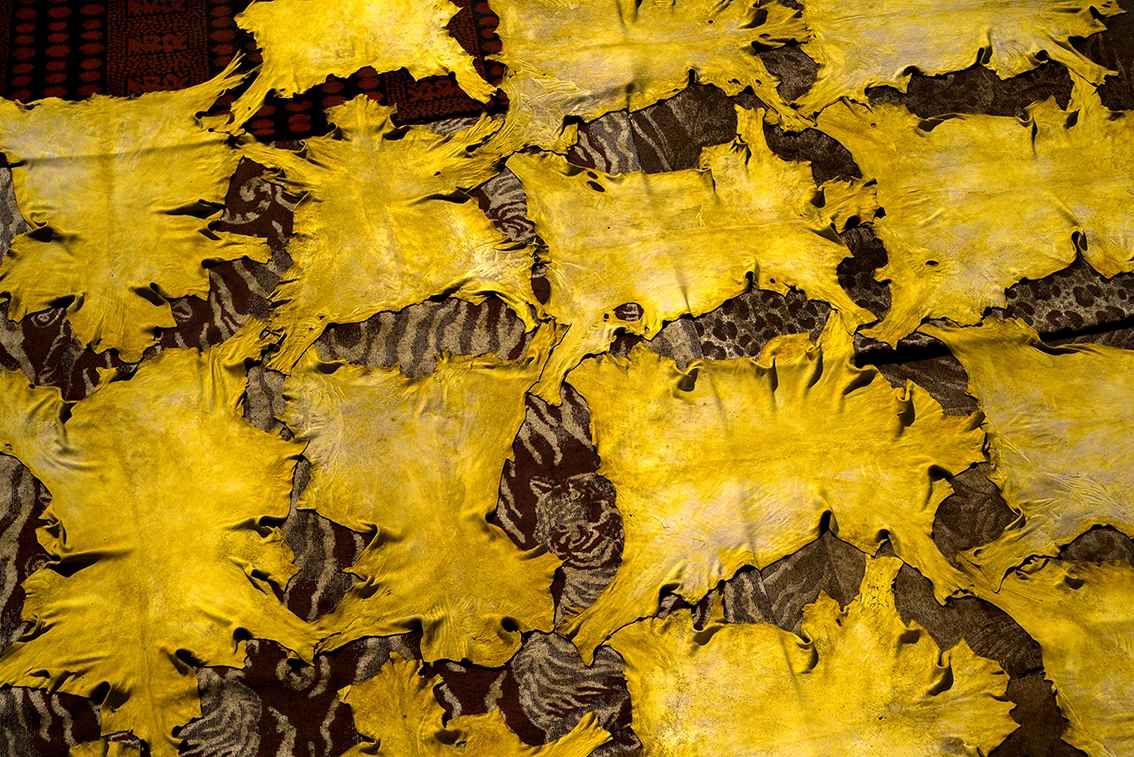
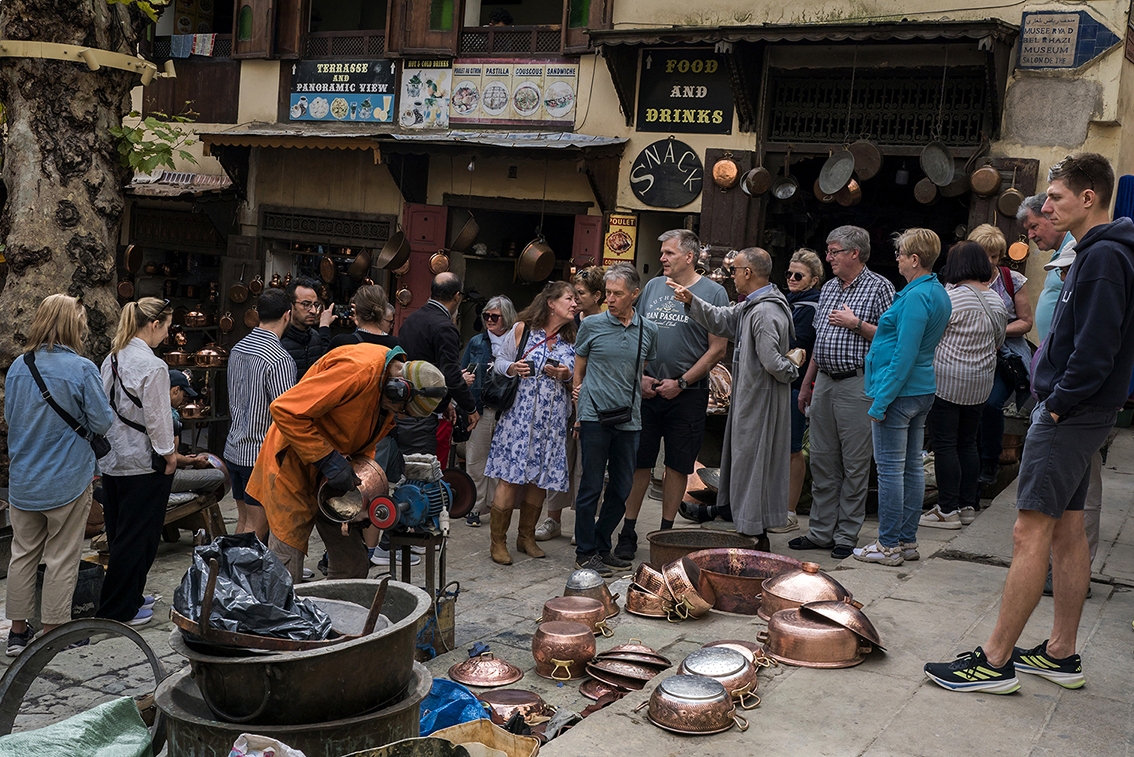
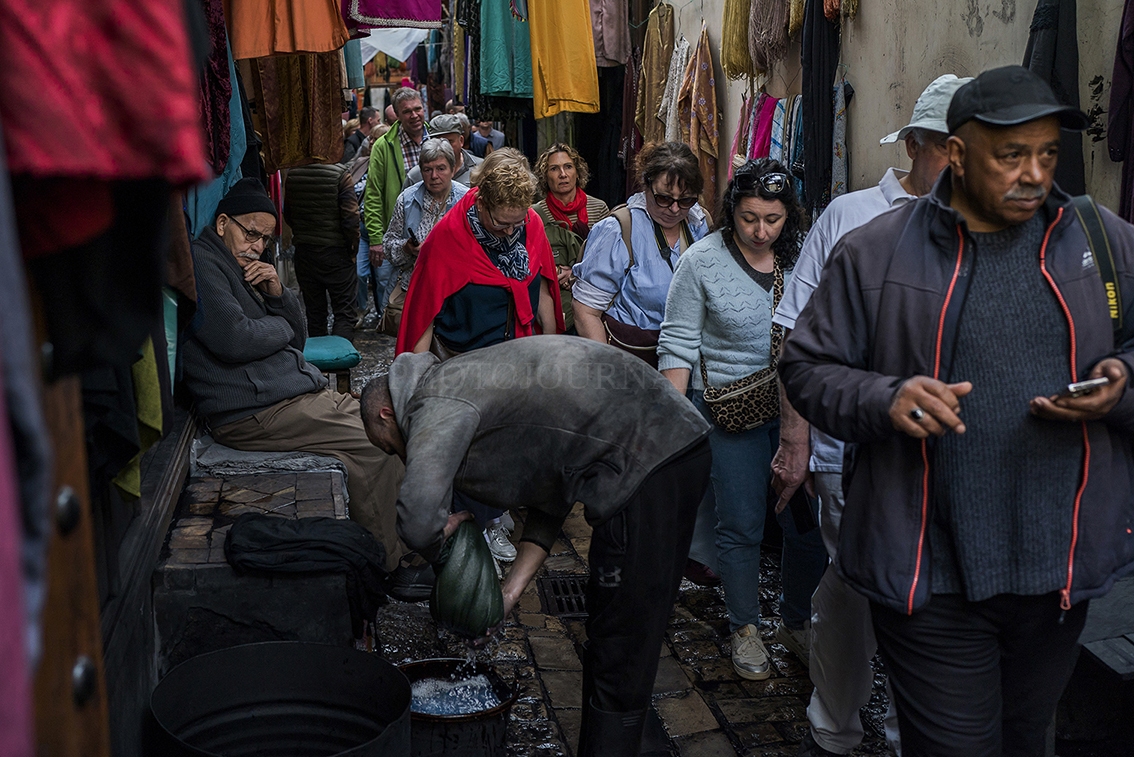
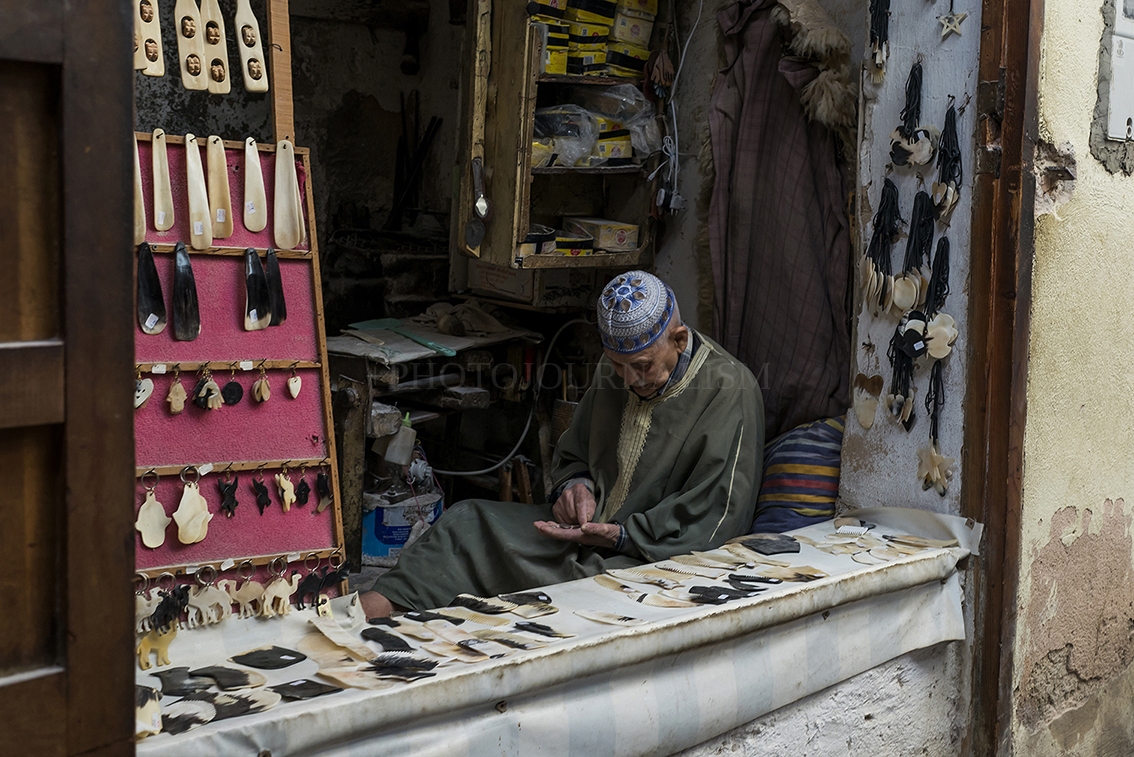
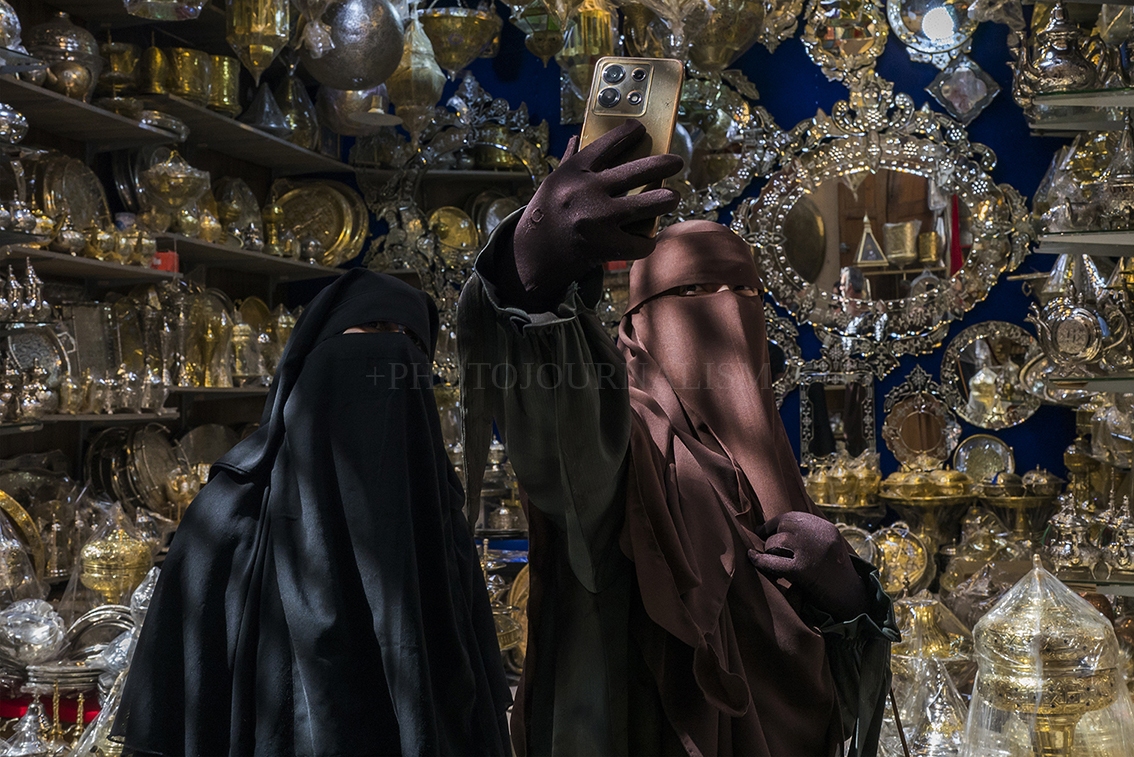
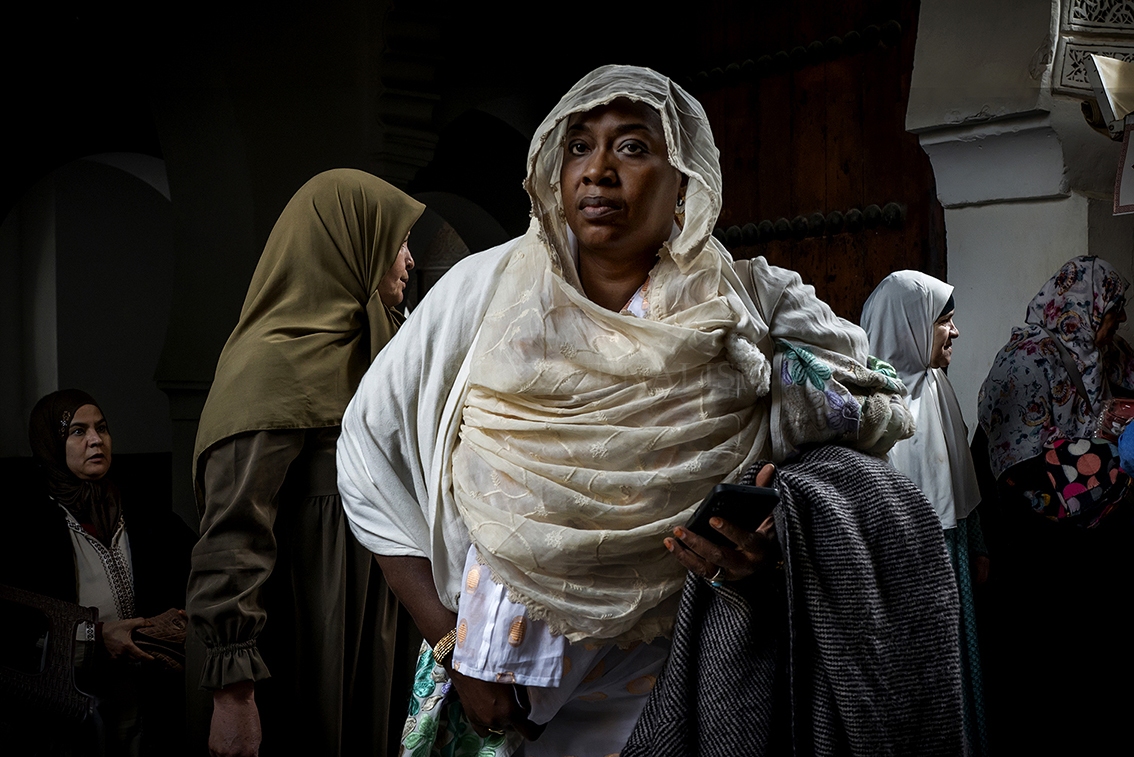
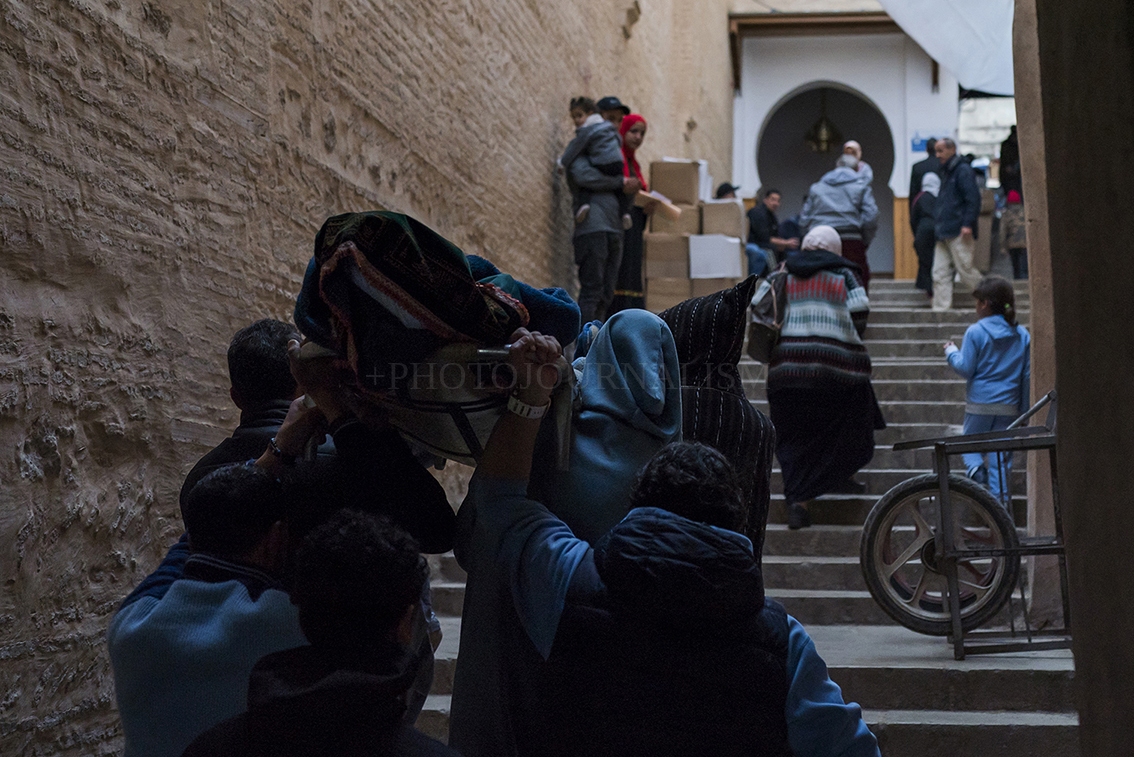
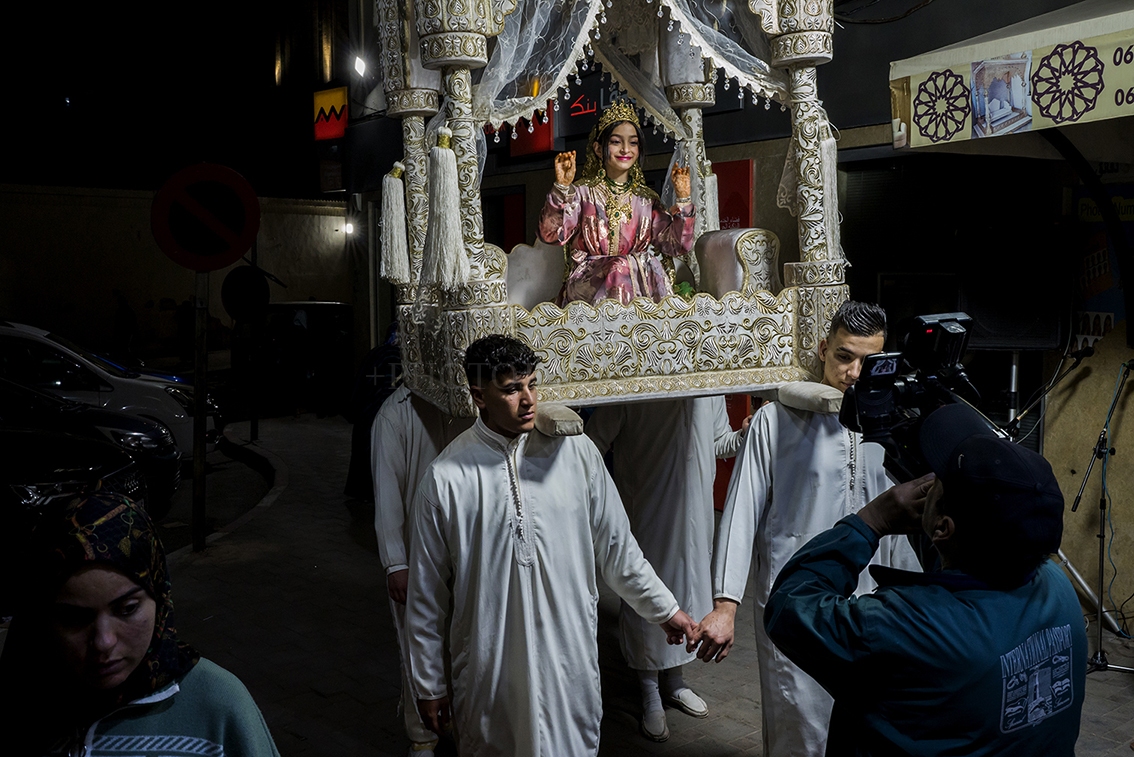
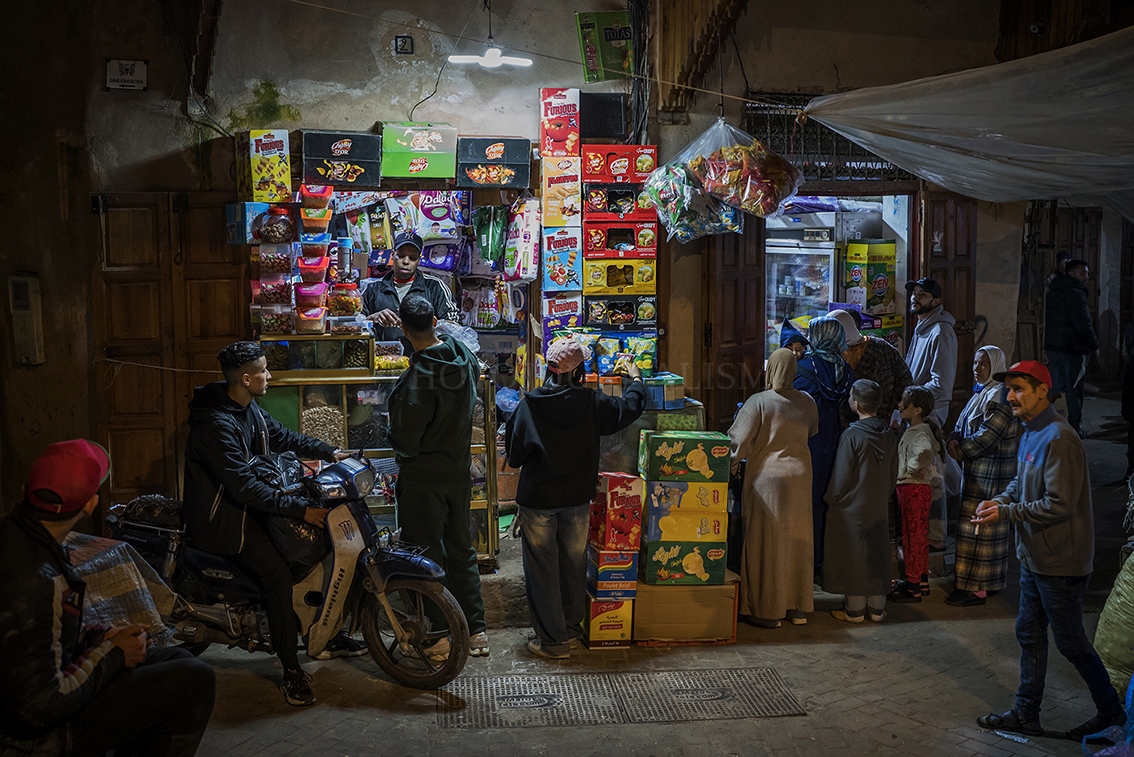
Tourism feels as much a part of the old Medina of Fez as its endless souk, the muezzin’s call to prayer, or the air and sunshine of its labyrinthine streets. In the midst of Ramadan, the day unfolds with its vibrant routine: teeming markets, the hammering of the coppersmiths, and the pungent stench of the tanneries jostling with the occasional breeze. Waves of worshippers streaming in and out of the mosques mingle with clusters of international tourists coming and going without losing sight of their guide’s little flag. In the middle of the Safarine Square, a large group of Central European appearance gathers round a coppersmith who is tempering a piece over his brazier. The guide, a young Moroccan in an indigo-coloured djellaba, gives instructions in German: “You are free to take photographs as you please.” The ensuing swarm of cameras does not distract the craftsman from his work for even a moment. Not a single glance, nor even a meagre “salam aleikun” to indicate any connection with his surroundings. But the concept of a ‘living backdrop’ suggested by the scene – and which makes Fez so attractive to the tourism industry – could also apply to the way in which the coppersmith and fellow locals choose to view the foreign influx: a source of income that is only just a little bit of a nuisance. In fact, outside the guides’ working hours – and particularly after sunset – tourists tend to gather in one of the many sky bars and Airbnbs that dot the citadel, whilst the old streets regains its authentic Muslim flavour in the reddish glow of the lamps, seemingly untouched by any signs of gentrification.